
Basement Waterproofing Paint: When It Works, When It Fails, How to Apply It
Every spring I get the same email, in slightly different words: "I painted my basement walls with waterproofing paint last fall and they're wet again. Did I buy the wrong brand?" Sometimes the answer…
In this article 16
- What waterproofing paint actually is
- Masonry waterproofing paint (latex or acrylic)
- Oil-based or solvent-based masonry coatings
- Cementitious waterproofing coatings
- Epoxy and two-part coatings
- Elastomeric coatings
- When basement waterproofing paint works
- When it won’t work
- Test before you paint
- Comparing the main types
- How to apply it so it lasts
- Paint quantity calculator
- Mistakes I see over and over
- A basement where paint was enough
- When you need more than paint
- Basement waterproofing paint FAQ
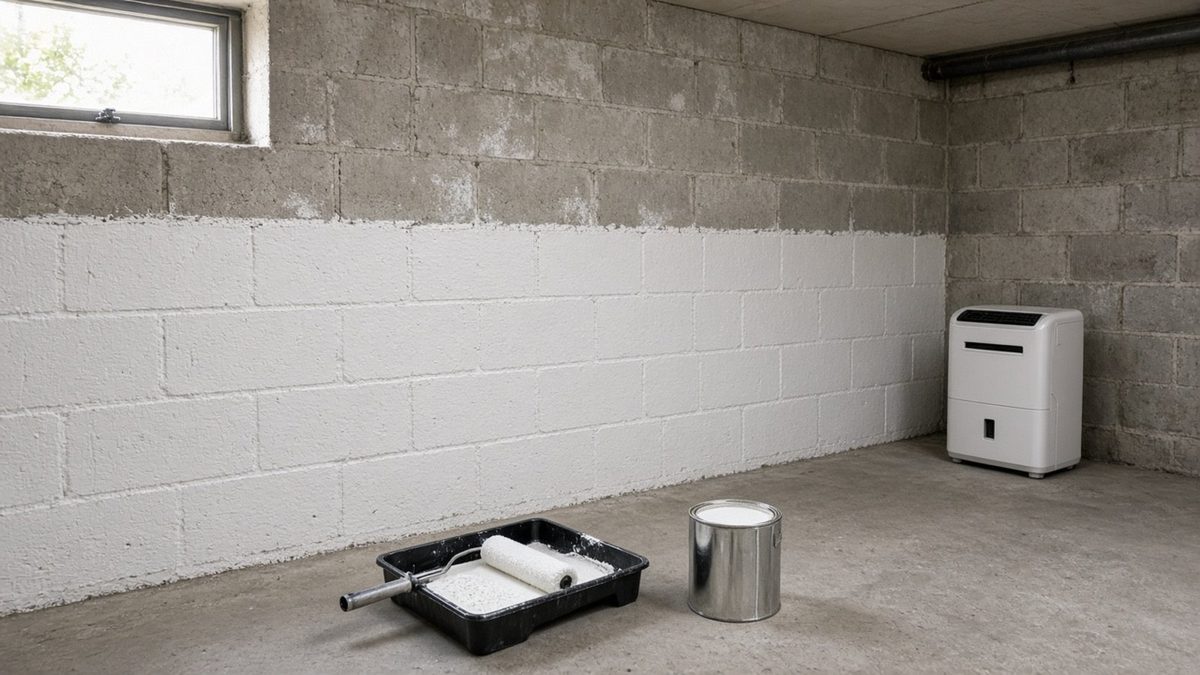
Every spring I get the same email, in slightly different words: “I painted my basement walls with waterproofing paint last fall and they’re wet again. Did I buy the wrong brand?” Sometimes the answer is yes. Much more often, the paint did exactly what it’s designed to do and the water problem was simply bigger than any paint can handle. Basement waterproofing paint is a genuinely useful product. It stops dampness, seals porous block, cuts musty smell and makes a dingy basement look a lot better. What it can’t do is hold back water under pressure coming through cracks, joints and the floor-wall seam. Below I go through how these coatings work, the main types, how to tell if your basement is a good candidate, the right way to apply them, and what to do when paint isn’t the answer.
What waterproofing paint actually is
“Waterproofing paint” covers a few different products. They all go on like paint, with a brush, roller or sprayer, but they work in different ways.
Masonry waterproofing paint (latex or acrylic)
These are thick, heavily filled acrylic or latex coatings designed for concrete and block. They fill pores and form a dense film. Most of the big-box “basement waterproofer” cans fall into this group. Many can resist some hydrostatic pressure according to their labels, but in practice they handle dampness and seepage much better than active leaks.
Oil-based or solvent-based masonry coatings
Similar idea with a different base, these tend to adhere well to slightly chalky surfaces and stand up to more moisture. They smell more and need more ventilation.
Cementitious waterproofing coatings
Portland-cement-based products, often mixed from a powder and applied thick with a brush. They bond into the masonry and some contain crystalline additives that grow into the pores. They’re tougher against water pressure than most paints, though not flexible, so they crack if the wall moves.
Epoxy and two-part coatings
Used mainly on floors and sometimes walls, these form a hard, impermeable layer but need a dry, well-prepared surface to bond. Applied over damp concrete, they tend to blister.
Elastomeric coatings
Rubbery, very flexible coatings that bridge hairline cracks. More common on exterior walls but used inside too.
When basement waterproofing paint works
Paint is a good choice when:
- The walls are damp or feel cool and clammy, but there’s no running water
- Block walls “sweat” or show dark patches after rain that dry later
- There’s mild efflorescence (white powdery deposits) from moisture moving through the wall
- You want to reduce humidity and musty smell as part of a broader moisture plan
- The walls are sound, without major cracks or bowing
In those cases, a good coating, applied right, makes a noticeable difference. If you’re not sure where your basement falls, our guide to signs your basement needs waterproofing walks through the symptoms.
When it won’t work
Paint is the wrong tool for:
- Water flowing or dripping through cracks
- Water coming in at the floor-wall joint (the “cove” joint), which is usually hydrostatic pressure from below
- Walls that are bowing, leaning or cracked horizontally
- Basements that flood during heavy rain
- High water tables where the floor itself gets wet
Painting over those conditions doesn’t stop the water. It pushes it to the next weak spot, and the pressure behind the paint often blisters and peels it off within a season. If water is coming in, the fix is drainage, crack repair or exterior waterproofing. Our pages on a leaking basement and sump pump, interior drain or coating help you sort out which fix fits.
Test before you paint
Tape a 2-foot square of clear plastic sheeting to the bare wall, sealing all four edges, and leave it for 48 to 72 hours.
- Moisture on the room side of the plastic means condensation: humid basement air hitting a cool wall. That’s a dehumidifier and ventilation problem, and paint won’t fix it.
- Moisture between the plastic and the wall means water is coming through the wall. Mild dampness here is what paint is for.
- If the wall behind the plastic is wet or dripping, paint alone isn’t enough.
I’ve seen people spend a weekend painting a basement for what turned out to be pure condensation. The plastic test takes three minutes to set up.
Comparing the main types
| Type | Best for | Water pressure | Flexibility | Notes |
|---|---|---|---|---|
| Acrylic/latex masonry paint | Damp walls, cosmetic sealing | Low | Low to moderate | Easy, low odor |
| Oil-based masonry coating | Damp walls, harder surfaces | Low to moderate | Low | Strong odor |
| Cementitious coating | Block and poured walls with seepage | Moderate | None | Bonds into masonry |
| Crystalline coating | Poured concrete with seepage | Moderate to high | None | Grows into pores |
| Epoxy | Floors, dry walls | Varies | Low | Blisters on damp concrete |
| Elastomeric | Walls with hairline cracks | Low | High | Bridges small cracks |
How to apply it so it lasts
- Fix what you can first: downspouts that drain at the foundation, grading that slopes toward the house and open cracks.
- Remove existing paint if it’s peeling. Most waterproof coatings need bare masonry to bond.
- Clean off dirt, mildew and efflorescence. A stiff brush, a masonry cleaner and rinsing work for most walls. For heavy efflorescence, our article on efflorescence on basement walls has the details.
- Patch cracks and holes with hydraulic cement or a patching compound recommended by the coating maker.
- Let the wall dry. Run a dehumidifier for a few days.
- Apply the first coat with a stiff brush or a thick-nap roller, working it into the pores. Block walls need extra attention at the mortar joints.
- Let it dry per the label, then apply the second coat. Two coats are standard; many failures come from a single thin coat.
Coverage drops a lot on rough block, often to half of what the can claims on smooth concrete. Use the calculator below to plan.
Paint quantity calculator
Basement waterproofing paint calculator
Mistakes I see over and over
The most common one is painting in summer, when the wall is at its driest, and declaring victory. Then the spring rains hit and the paint blisters. If you can, do the plastic test during a wet stretch, so you’re judging the wall at its worst.
Close behind is painting over efflorescence. That white crust is salt, and paint applied over it has nothing solid to grab. Within months the salt keeps pushing out and the coating flakes off in patches. Scrub it, rinse it, let it dry and check again in a week before you paint.
Another is using regular interior latex as a first coat, or “priming” with it. Ordinary wall paint doesn’t belong under a waterproof coating, and most makers say so in the fine print. Put the waterproofing coat directly on clean masonry.
Then there’s the block-wall shortcut. Folks roll the face of each block and barely touch the mortar lines, which is backwards, since the joints and hollow cores are where most of the water travels. Jab the brush into every joint.
Last one, and it’s sneaky: unplugging the dehumidifier once the paint’s on. The paint only slows what’s coming through the wall; the air down there is still muggy all summer. Shoot for something like 50 percent humidity.
A basement where paint was enough
A reader sent me photos of her 1960s block basement: dark, damp patches after every rain, a white crust along the bottom courses, and a musty smell that got into the laundry. No standing water, no cracks wider than a hairline. She did the plastic test and got moisture behind the sheet, not in front of it.
We talked through a plan: extend two downspouts that were dumping right at the corners, scrub off the efflorescence, patch a few mortar joints, run a dehumidifier for a week and apply two coats of a cementitious waterproofing coating followed by a masonry paint for looks. Total spend was a bit under $400 and two weekends. A year later, the dark patches are gone and the dehumidifier runs far less. Paint was the right answer for her basement, because the water problem was dampness, not leaking.
When you need more than paint
If water is actively coming in, look at interior drainage with a sump pump, crack injection, exterior excavation and membrane, or a combination. The right choice depends on where the water comes from. We compare those approaches in interior vs exterior basement waterproofing, and for exterior systems, ExpertFoundationWaterproofing has a clear guide to choosing a foundation waterproofing membrane. For budgeting, our basement waterproofing cost guide covers typical prices.
Basement waterproofing paint FAQ
Does basement waterproofing paint really work?
Yes, for dampness and seepage on sound walls. It won’t stop active leaks or water under pressure.
Can you use waterproofing paint on a basement floor?
Some products are rated for floors, but floors with moisture coming up are better served by drainage or a moisture-tolerant coating.
How many coats of waterproofing paint do I need?
Usually two. Block walls often need more material per coat than the label suggests.
Can I paint over old paint?
Most waterproofing coatings need bare masonry. Remove peeling or flaking paint first.
Why is my waterproofing paint peeling?
Usually water pressure behind it, poor prep or paint over efflorescence or old paint.
How long does basement waterproofing paint last?
Often several years when the water source is controlled; it may need touch-ups.
Stop guessing about your basement.
Whether you are diagnosing a damp wall or specifying a coating system, the next step is a proper look at the structure.
